We run out to a ATM whenever we are out of cash in our hands.But have you ever wondered how does ATM works ? Let me explain you that.

What is an Automated Teller Machine & Its Working
The term ATM stands for automated teller machine. It is an electronic device that is used by only bank customers to process account transactions. The users access their accounts through a special type of plastic card that is encoded with user information on a magnetic strip. The strip contains an identification code that is transmitted to the bank’s central computer by modem. The users insert the card into ATMs to access the account and process their account transactions. The automated teller machine was invented by John Shepherd-Barron in the year 1960. This article discusses an overview of the automated teller machine (ATM).
What is an Automated Teller Machine (ATM)?
By using an automated teller machine or ATM we can perform different financial transactions such as cash deposits, withdrawals, transfer funds, information of account, ATM PIN change, and also linking the Aadhaar (In India) number to the bank account so that the interaction between the bank staff and the customer can be reduced.
The automated teller machine (ATM) is an automatic banking machine (ABM) that allows the customer to complete basic transactions without any help from bank representatives. There are two types of automated teller machines (ATMs). The basic one allows the customer to only draw cash and receive a report of the account balance. Another one is a more complex machine that accepts the deposit, provides credit card payment facilities and reports account information.

History of Automated Teller Machines
After some developments, the initial cash dispensing machine was developed by Britain, in London, 1967. This machine was first used by “Barclays Bank” which is located in Enfield Town of North London. This machine was developed by the firm De La Rue & John Shepherd-Barron. This was the essential point for current ATMs.
In India, the development of ATMs was very slow because they were launched in the early 1990s to the Indians and assisted through foreign banks.
When most of the banks were facing severe problems because of the lack of a strong branch system, then automated teller machines appeared like the best solution to these problems.
The ATM machine was implemented to reduce the obstructions of the branch networking by reaching out to the customers by offering comfortable services with fewer transaction charges. After that, many improvements in this technology have arrived & also customer accessibility has also improved through boundaries.
Block Diagram of Automated Teller Machine

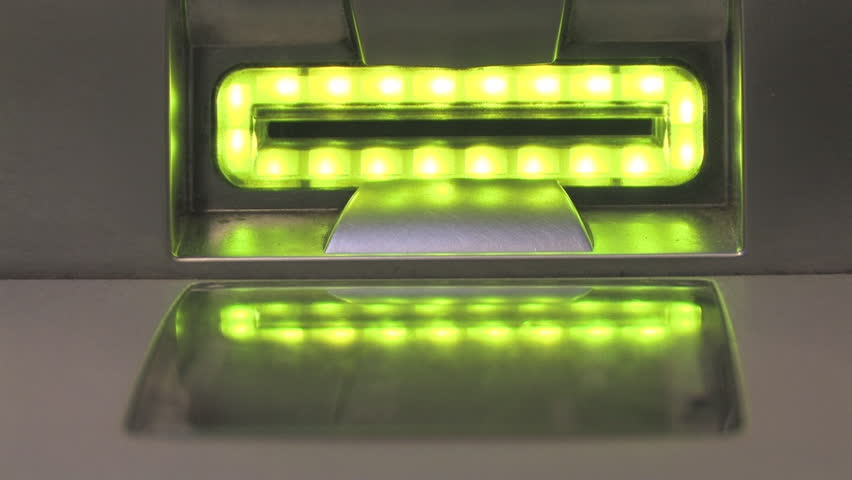
The block diagram of the automated teller machine consists of mainly two input devices and four output devices. The input devices like card reader and keypad whereas output devices are speaker, display screen, receipt printer, and cash depositor.
Automated Teller Machine Working Principle
The automated teller machine is simply a data terminal with two inputs and four output devices. These devices are interfaced with the processor. The processor is the heart of the ATM. All the ATMs working around the world are based on a centralized database system. The ATM has to connect and communicate with the host processor (server).
The host processor is communicating with the internet service provider (ISP). It is the gateway through all the ATM networks available to the cardholder. When a cardholder wants to do an ATM transaction, the user provides necessary information through a card reader and keypad. The ATM forwards this information to the host processor. The host processor enters the transaction request to the cardholder bank.
If the cardholder requests the cash, the host processor takes the cash from the cardholder’s account. Once the funds are transferred from the customer account to the host processor bank account, the processor sends the approval code to the ATM and the authorized machine to dispense the cash. This is the way to get the amount on ATMs. The ATM network is fully based on a centralized database environment. This will make life easier and secure cash.
Input Devices
Card Reader :
Keypad:

The card is recognized after the machine asks for further details like your identification number, withdrawal, and your balance inquiry Each card has a unique PIN so that there is little chance for some else to withdraw money from your account. There are separate laws to protect the PIN code while sending it to the host processor. The PIN is mostly sent in encrypted form. The keyboard contains 48 keys and is interfaced to the processor.
Output Devices
Speaker:
The speaker provides audio feedback when a particular key is pressed.
Display Screen:
The display screen displays the transaction information. Each step of withdrawal is shown by the display screen. A CRT screen or LCD screen is used by most of the ATMs.
Receipt Printer:
The receipt printer prints all the details recording your withdrawal, date and time, and the amount of withdrawal and also shows the balance of your account in the receipt.
Cash Dispenser:
The cash dispenser is the heart of the ATM. This is a central system of the ATM from where the required money is obtained. From this portion, the user can collect the money. The cash dispenser must count each bill and give the required amount. If in some cases the money is folded, it will be moved to another section and becomes the reject bit. All these actions are carried out by high precision sensors. A complete record of each transaction is kept by the ATM with the help of an RTC device.
ATM Networking
The internet service provider (ISP) also plays an important role in the ATMs. This provides communication between ATM and host processors. When the transaction is made, the details are input by the cardholder. This information is passed on to the host processor by the ATM. The host processor checks these details with an authorized bank. If the details are matched, the host processor sends the approval code to the machine so that the cash can be transferred.
Types of ATM Machines
There are different types of ATMs in the market which include the following. Most of the host processors can support either leased-line or dial-up machines
Leased Line ATM Machines
The leased line machines connect directly to the host processor through a four-wire point to point dedicated telephone line. These types of machines are preferred in place. The operating cost of these machines is very high.
Dial-Up ATM Machines
The dial-up ATMs connect to the host processor through a normal phone line using a modem. These require a normal connection their and their initial installation cost is very less. The operating cost of these machines is low compared with leased line machines.
White Label ATM
These ATMs are arranged, operated & owned through non-bank entities. These ATMs were launched by RBI (Reserve Bank of India) for assisting financial insertion as well as drive ATM access within the country. These types of ATMs will not show any bank’s logo. The first white logo ATM was launched by TATA in India beneath the brand name like Indicash.
Brown Label ATM
Brown label ATMs were maintained & owned through a service provider where a supporter bank whose brand can be employed on ATM to take care of network connectivity as well as cash organization.
Onsite ATM
These ATM machines are arranged in locations wherever a bank branch is located. So, both the bank as well as ATM can be used physically for several purposes by being on-site. Many customers can utilize this to keep away from the queue lines at the branch of the bank so that time taken to finish their bank transactions can be reduced.
Offsite ATM
These machines are arranged on a separate basis, which means that the bank has a place where there is only an ATM machine then this becomes an offsite ATM. This can be done to make sure that the bank reaches out to more geographical locations to utilize its services by the people even when there is no branch of the bank within the region. So these machines will operate outside of the bank locations.
Cash Dispenser
These machines allow simply balance inquiry, mini statement & cash withdrawals..
Mobile ATM
These machines move in the locations for the users because COVID 19 has led to the rush within the several Mobile ATMs.
Green Label
These types of ATMs are used especially for agricultural transactions.
Orange Label
These are mainly used for share transactions.
Yellow Label
These ATMs are used for an online purchase by providing an E-Commerce facility
Pink Label
These ATMs are used especially for women. These ATMs are observed by protectors to make sure that only women are accessing or not so that women waiting in long queues can be reduced.
ATM Security:
The ATM card is secured with a PIN which is kept secret. There is no way to get the PIN from your card. It is encrypted by strong software like Triple data Encryption Slandered.
How to Operate ATM Machine(Indian ATM)?
The Automated teller machine is very simple to operate. The step by step algorithm for ATM operation is discussed below.
- First, need to visit the nearby ATM center & place your ATM card within the machine.
- Select your language which appears on the ATM monitor like your local language, Hindi, and English.
- Select the transaction type from different transactions like money transfer, withdrawal, deposit, etc.
- Choose the account type like savings or current.
- Enter your 4-digit ATM pin number and enter the required amount to withdraw.
- Gather the money and collect your receipt
For further transactions, you can perform another also by selecting the option.
ATM Software
The ATM (Automated Teller Machine) design is a combination of hardware and software. The hardware of the machine is mainly designed for deposits of cash, withdrawal, payments of credit card & for reporting the information of account. The software of ATM is designed to control ATM transactions & channels on centralized databases.
The famous ATM software that works on the XFS platform comprises Diebold Agilis EmPower, Triton PRISM, NCR APTRA Edge, AbsoluteINTERACT, KAL Kalignite Software Platform, Wincor Nixdorf ProTopas, Phoenix Interactive VISTAatm, Intertech inter-ATM & Euronet EFTS. Once the ATM machines were shifted to industry standards then anxiety has increased on the software stack of ATM.
Be careful with the fraudsters in and around ATM.Always remeber "WE LIVE ONLY ONCE"
SOURCE: https://www.elprocus.com/
Comments
Post a Comment