All You Need To Know About NeuraLink.


When we first took science class in school, we learned about the five senses. Maybe not far into the future, that information might be as outdated as the idea of nine planets in our solar system . This might be thanks to Neuralink, a company that’s been making headlines for its controversial brain-chip interface. On July 17, 2019, the company finally unveiled its hard work in a YouTube live stream.

When you first hear it, Neuralink’s pursuit sounds like it comes straight out of a mad genius’s diary; certainly, with Elon Musk at the head of the company, that image might not be a far stretch. But if you look beyond what seems to be a Sci-Fi horror movie, you can get a glimpse of quite a different future for humanity — one that has a new, sixth sense: Neuralink.
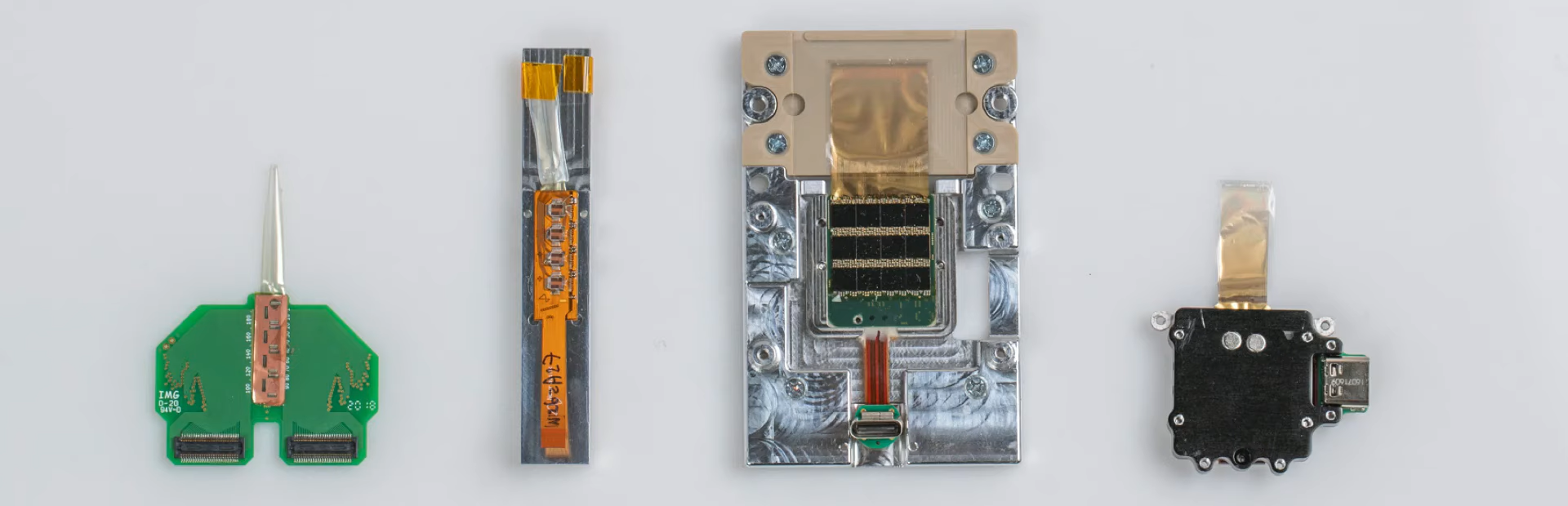
Neuralink Prototypes: the company has gone through years of research prior to its public announcement (Source: Neuralink Launch Event on YouTube)

What Is Neuralink Right Now?

Neuralink is a device that will first be used to help paraplegics with simple tasks such as using an iPhone and making mouse clicks on a computer — by making no physical movement. To be clear, human trials have not yet started; Elon Musk and his team are optimistic about beginning by the end of 2020, but they anchor that timeline with the fact that FDA approval is not easy. So far, Neuralink prototypes have been tested on rodents and apparently even a monkey, according to Musk.


The Part That’s In the Brain

Neuralink does involve surgically implanting some components onto the surface of your brain. But brain implants are not new — research and development have been going on, tested, and used since the 1970s. It’s just that previously, brain implants have not been considered enhancements; after all, our brains are still a big mystery, and we have only recently started decoding the genetic origins of our intelligence.


Ideally, we would like to preserve the sanctity of this sacred chamber — and I’m sure Elon Musk (as well as his team) would like to as well. At this point, though, it’s not possible. They realized this by running a test using electrodes, which are devices that are used to detect electric fields (in the brain, electric fields occur when nerves fire messages to one another — i.e., Neuralink uses the electrodes to detect when nerves are sending messages to each other).


One of the electrodes (we’ll call it Electrode 1) was placed right on the neuron. Because it’s directly on the neuron, it would be able to detect any electrical field generated as a result of the neuron firing. They then placed another electrode (we’ll call it Electrode 2) farther away to see if it could still detect an electric field from the neuron firing. If it could, they moved it farther and farther, until a point where Electrode 2 could no longer detect the neuron’s electrical signal — at that point, Electrode 1 would report that the neuron is firing, but Electrode 2 wouldn’t be able to confirm it. In other words, Electrode 2 was too far from the neuron. That distance was 60 nanometers. Without getting any further into the weeds, the fact is that 60 nanometers means it would have to be inside, not outside, the skull.


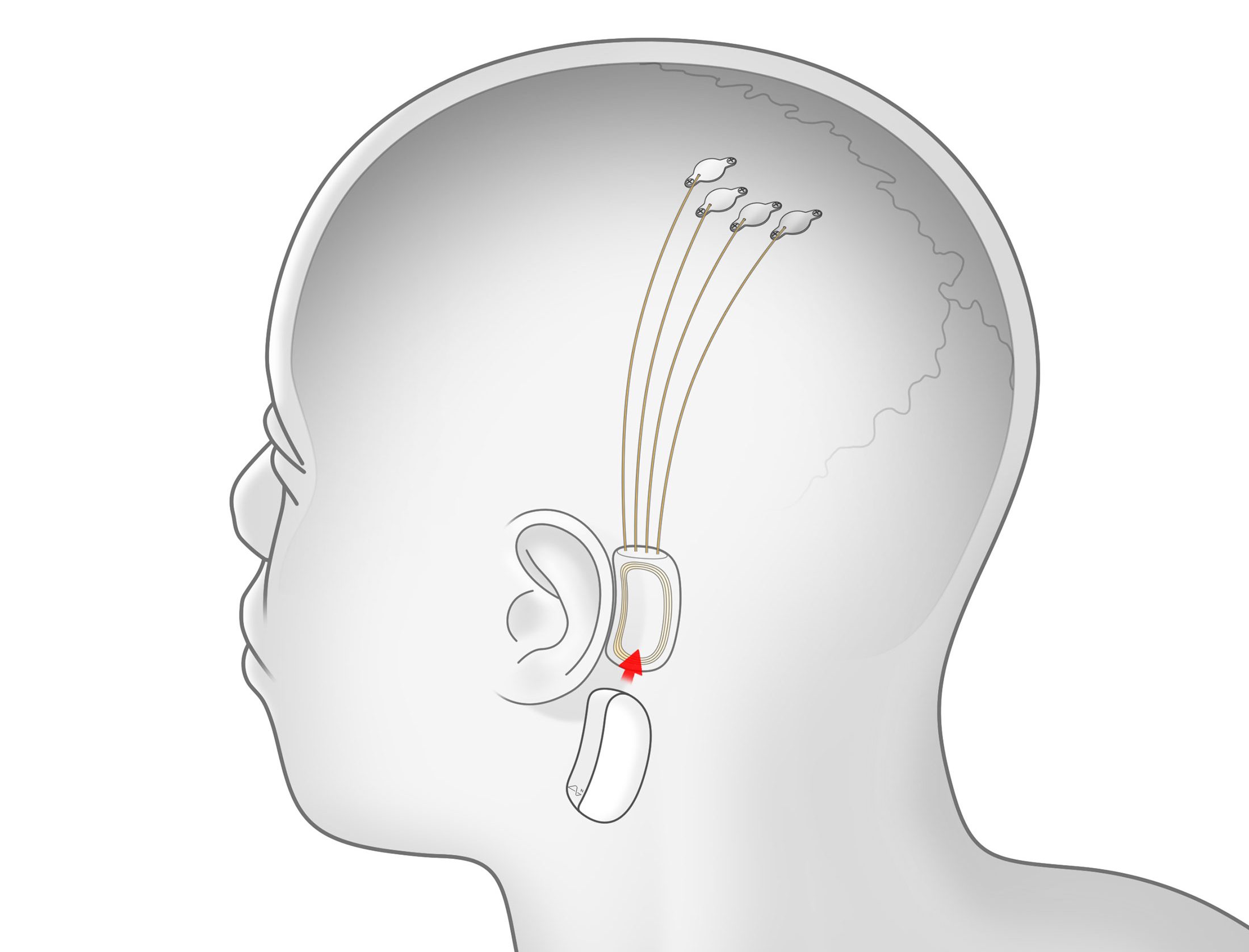
At the very least, the electrodes would need to reside underneath the skull. And that’s exactly what they’re going to do. The electrodes, along with a small receiver, will be fitted underneath the skull. No, you won’t have an antenna sticking out of your head, and no, poles are not impaling your brain.


N1 Sensor, the first version of the human-embedded chip (Source: Neuralink Launch Event on YouTube) without the outer mold. The mold is a cylindrical 8mm diameter, 4mm tall. Each has 1,204 electrodes.

Stick out your index finger and try to imagine the chip resting on top. Now you realize just how small it is — it’s certainly smaller than the AirPods I have in my ears right now, which fire signals back and forth with my brain caught in the crossfire. The cylindrical encasing it will be placed in is 8mm in diameter and stands 4mm tall.

Coming out of the encasing will be 1,024 tiny, thin electrodes that look like microscopic threads. When I say tiny, we are looking at approximately 6 nanometers in diameter. To compare, imagine the diameter of your hair, and then divide that diameter by ten. It’s so small that something as comparatively large as a human hand just won’t be able to install it on the brain. That’s why Neuralink created a robotic surgeon, too.


The robotic surgeon that places Neuralink N1 electrodes into the brain (Source: Neuralink Launch Event on YouTube)

This robot has the ability to make the precise movements necessary to install the threads into your brain. It sounds like a simple task, but at the small scale that the threads are, it becomes a task that’s about as complicated as landing a space rocket safely back on Earth — something Musk is all too familiar with.

These things are really, really small. You really can’t manipulate them with your hand. The threads are peeled off one at a time by the robot to place into the brain… So we had to build a surgical robot… The surgery is not possible without the robot.
- Max Hodak, President of Neuralink

That’s because, at that scale, there are other factors that it has to consider; for example, breathing and heartbeat. Both are involuntary. Sure, a person who is not under complete sedation could try to hold his or her breath for the hour-long procedure, but can he or she hold a heartbeat? I don’t think anyone would recommend that.

You might wonder if poking the brain will just end up in massive headaches from the pain. The answer is no. First of all, the brain does not have any pain receptors, so you won’t feel anything. Second of all, the electrodes are so thin. If the hair analogy isn’t visual enough, think of it like this: those electrodes are thinner than a mosquito's proboscis (that long needle that comes out when it wants to suck your blood) — the inner part of its mouth, the Labium, is around 40 nanometers in diameter (compared to the electrode’s 6 nanometer diameter). When was the last time you felt a mosquito biting you?
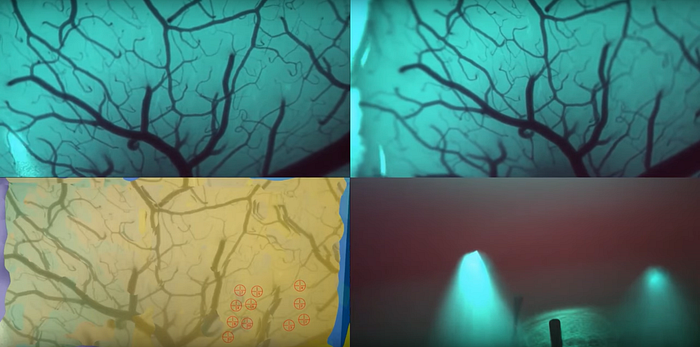

Take a look at the Neuralink surgical robot in action (Source: Neuralink Launch Event on YouTube)

The Neuralink surgical robot takes the variables into account when identifying the right areas to place each electrode, minimizing the likelihood of hitting a blood vessel — which would not be good for the brain. In the image above (you can click the source link to go straight to the point in the live stream where they show this video), the top two pieces of footage show the movement of a simulated brain with variables such as heartbeat and breathing, while the bottom left one shows what the robot sees after accounting for these variables — a seemingly still brain.


The Part That’s Outside the Brain

Having a bionic superbrain chip robotically implanted in your head is something that most of us would consider a once-in-a-lifetime experience. Musk and his team want to keep it that way. Software updates are already inconvenient, and always happen whenever we don’t want them to. The idea of having to make a trip to the local neurosurgeon every time the software wants to run an update takes away a glimpse of the appeal that having a superbrain might bring. So a large piece of Neuralink resides outside of the skull, as a wearable behind your ear.
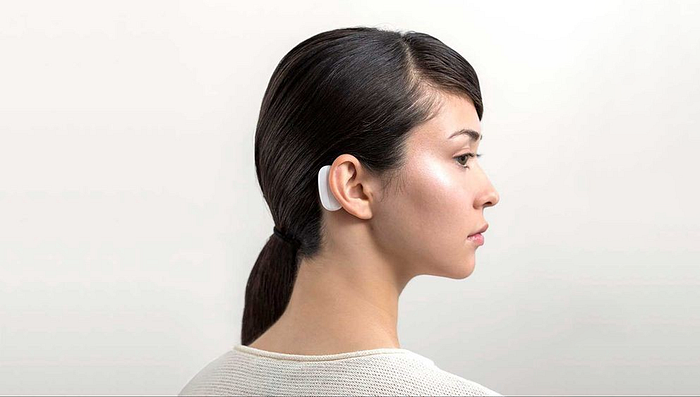
The Neuralink wearable named the Link (Source: Neuralink Launch Event on YouTube)

This wearable, called the Link, houses the software as well as the battery. This way, when you’re at 5% battery life, you can just remove the device to recharge. Same with a software update — the processing happens on the Link.

What Neuralink Wants To Be

It wants to be a computer inside everyone’s brain — one that we don’t have to carry around in our hands, and that’s undetectable in use. While Elon Musk probably likes the idea of helping out paraplegics, nothing seems to tickle him more than giving our future AI overlords a good kick below the belt. And he believes Neuralink will deliver that blow.

[Neuralink] is not a mandatory thing. This is a thing you can choose to have if you want. This is something I think will be really important at a civilization-level scale.
- Elon Musk


What Neuralink Can Become

Well, from a capitalist perspective, bigger than Apple or any other existing tech giant (except maybe Amazon, because otherwise where would we go shopping with our minds?). Why do you need an iPhone or an Apple Watch (actually, why do you even need an Apple watch right now…) when you’ve got it all in your head! The success of Neuralink will change the trajectory of future innovation. What once seemed quite innovative and still beyond reach (e.g., augmented reality glasses) now seems a bit outdated when imagining a future with Neuralink.

But Neuralink can go far beyond the novelties of augmented reality Space Invaders. For example, telepathy is not that farfetched anymore. After all, the signals being received by the electrodes can be wirelessly transmitted to electronic devices, and the Link earpiece itself is an electronic device. Transferring the messages from one Link device to another would be akin to airdropping images between iPhones. Add in a bit of quantum entanglement, and maybe we can make some telepathic phone calls to our families. At this point in time, Neuralink’s technology probably won’t be able to create full sentences from the little firings in your neurons, but it can be trained to translate certain firing patterns into, maybe, images. Or single words. And this type of feature can be improved over time.

The speed of communication will also improve. Right now, when I’m typing, the speed at which I communicate is limited to the speed at which my fingers can gracefully traverse planet QWERTY. When I’m using my phone, it’s how fast my thumbs can weave. Even when I’m speaking, I can only speak so quickly before I get tongue twisted. But a mind’s thoughts are instant. Neuralink may eventually be able to capture those instant thoughts and transcribe them into instant communication, faster than the words can leave my mouth.
Another, more edgy use could be as a replacement for drugs — let’s start with the more acceptable, recreational ones. You wouldn’t need to drink coffee, smoke cigarettes, or drink alcohol anymore in order to get their effects.

The Future Concerns

Talking about concerns, there’s a list of that, too. Ransomware, a virus that locks your computer’s files and deletes them one by one until you pay a ransom (usually in Bitcoin), is a serious threat to computer networks today. Now imagine that on your brain. Hacking, software bugs, and hardware defects could be a threat to your daily life.

In the less-distant future, another concern is Neuralink’s ability to not only read signals, fire its own signals — it’s essentially able to do work on behalf of your neurons. But the brain is very sensitive — it changes throughout an entire lifetime in response to different stimuli, including chemicals and how neurons communicate with each other. Adding Neuralink into the equation could change how our brains develop.

Neuralink is undeniably an innovative project — one expected of Elon Musk. His tendency to focus on the future, rather than the perceived limitations in existence today, guides others to see the strong potential of this technology or technologies like this one. I’m very eager to imagine more of what it will bring for the future of human intelligence. Will I try version one? At this point, probably not, but I can’t speak for future me.


source:https://medium.com/


"WE LIVE ONLY ONCE"
Happy Learning !!!


Comments

Popular posts from this blog

The Power Of Nature

The Power Of Nature In my childhood I remember waking with chrips of sparrows.Every morning sparrows,crows and some other birds used to make sounds waking up the entire city.Upon waking I used to sit in the sun and enjoy the warmth of the morning sun.Days had changed and now, upon waking up in the morning  most of us check smartphones and glue our eyes to it.How many of you remember spending time with nature watching sunrise,sunset,trees and birds.Do we have time to enjoy the most precious god given gift? Even If we have time we carry our smartphones and spend time with smartphone sitting in the nature. Do you think is this the real kind of enjoying our nature? I dont think so.! Mother Nature has provided us with all the tools we need to protect humanity from the violent and life-threatening spread of viral pandemics, rising seas, extreme weather, spiking temperatures, degraded habitats, uncontrolled wildfires, and other catastrophes built from the sheer avarice of the human race. ...

You Need To Quit These Brain Damaging Habits Immediately !

86 billion. That’s the number of cells your brain has. Without a doubt, the gooey mess between your ears is controlling your body like nothing else. It only makes sense to spend most of our time taking care of it. But we don’t. In fact, most don’t even think the brain needs care. Experts have determined that our modern lifestyle is chipping away at our neural pathways, making us slower, dumber, and less creative. There are hundreds of reasons why that’s the case. To fix that, we need to be aware of the bad habits that we’ve picked up. To some these habits can come as a shock — for they never would’ve thought that damage they are doing to themselves through their indulgence. Let’s see what they are. The Disastrous Effect of Inactivity Ever since remote work has become the norm, many people have found themselves not leaving their bedrooms. I know people who eat, drink, sleep and work at the same place all day. The only exercise they get is getting groceries, which thanks to technology, c...

You Should Read These Quotes Everyday !

  Have you ever gotten up in the morning and just felt like me. Almost Like you have no purpose for the day and you are not in your most productive mental state. Well, you will not believe how much one positive thought can do to change that mindset. My goal is to spark that positive thought, and quotes are here to help! You might think that Some of them are a little cheezy, but I encourage you not to roll your eyes because they carry great meaning. There is so much that we ought to be thankful for but instead, we waste most of our mental energy thinking about the things that we don’t have and we never end up being satisfied. So this is your chance to be grateful! 1. “Be Thankful For What You Have; You’ll End Up Having More. If You Concentrate On What You Don’t Have, You’ll Never, Ever Have Enough” –Oprah Winfrey Gratefulness is one of the simplest things you can practice and you get something so valuable in return. No matter what you are going through in life, I can guarantee that ...